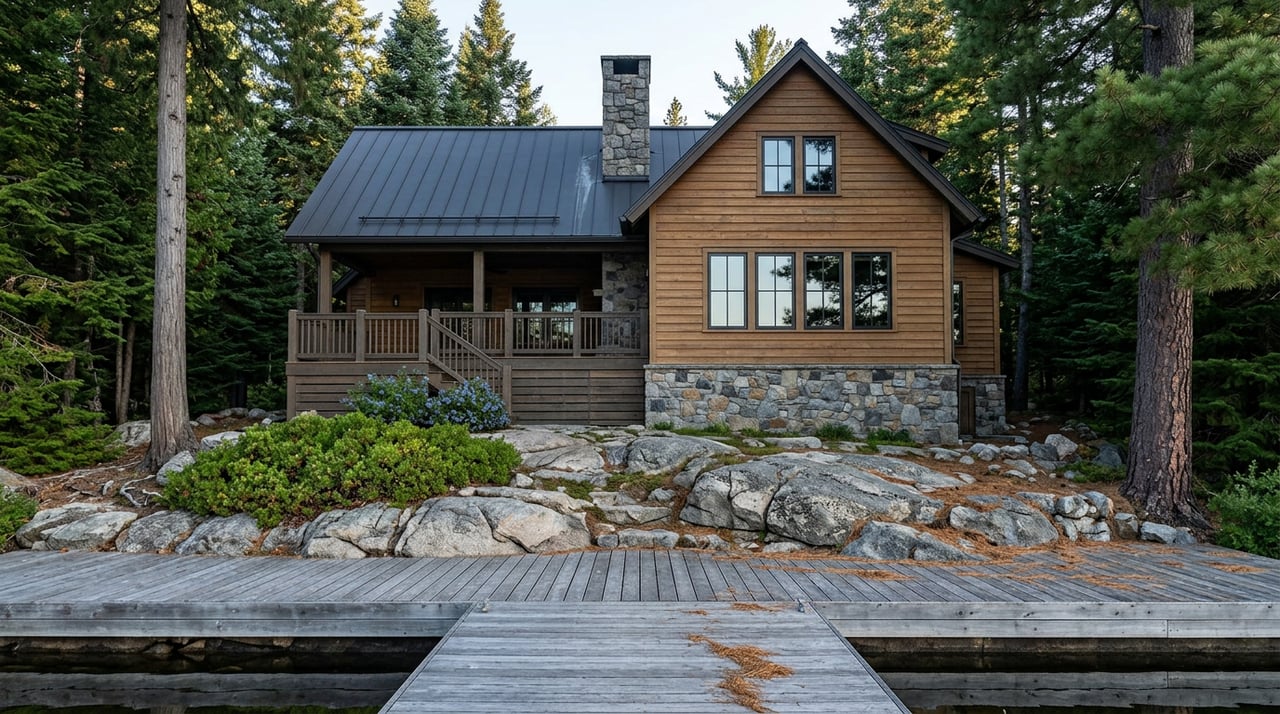
The 500-Foot Rule That Decides Your Rental Math in Cascade Properties
September 3, 2026
September 3, 2026
An out-of-state buyer we spoke with this year had done the homework everyone tells you to do before buying a Tahoe rental property. He'd checked the county's short-term rental cap, and priced his offer on Cascade Road assuming he could pull a permit the same way the seller had. He couldn't. Not because of the countywide cap, but because his nearest neighbor already held one and El Dorado County's buffer rule put his parcel on a waitlist before he ever submitted paperwork.
That distinction, between a countywide number and a parcel-specific reality, can shape whether a lakefront purchase here pencils out as an income property or simply as a beautiful place to park equity.
El Dorado County manages vacation home rentals in the unincorporated Tahoe Basin, which includes Cascade Properties, under a Vacation Home Rental ordinance capped at 900 permits basin-wide. Multiple sources tracking the program through early 2026 discuss the cap, which is the number most buyers hear and stop asking questions about.
The cap isn't the mechanism that governs Cascade Properties. The buffer is. County rules require a minimum of 500 feet between any two active VHR or HHR permits, and the county maintains a map, updated nightly, to show exactly where that buffer currently falls. In a 31-home enclave built on a tight private road grid between Cascade Creek and Baldwin Beach, 500 feet doesn't leave much room. A handful of active permits among the existing owners can effectively lock out permit eligibility for most of their neighbors, independent of how many slots remain in the county's 900-permit pool.
Here's the difference in practice:
| What buyers usually check | What actually applies in Cascade Properties |
|---|---|
| Countywide VHR cap (900 permits) | Parcel-specific 500-ft buffer from any active permit |
| "Is the program full?" | "Is my specific lot within 500 feet of an existing rental?" |
| One number, updated occasionally | A map that changes nightly as permits are added, dropped, or renewed |
If you're evaluating a Cascade Properties purchase for rental income, the question isn't whether the county still has room. It's whether your specific address clears the buffer around it, and that answer can only come from checking the current nightly-updated VHR map before you write an offer, rather than relying on the countywide cap alone.
Even if a parcel clears the buffer test today, the seller's existing permit does not transfer with the sale. County policy ties Vacation and Hosted Home Rental permits to the specific owner and address on the application, and a change of ownership terminates the permit. The new owner has to apply fresh and clear the same 500-foot buffer check, all over again, with no guarantee the outcome matches what the seller enjoyed.
This matters more in Cascade Properties than almost anywhere else in the Basin because the enclave is so small that a single permit change among 31 homes can shift the buffer map for several neighbors at once. A seller's active rental history is not an asset you're purchasing. It's a status that resets the moment the deed changes hands, and whether you can replicate it depends on who else in a tightly packed 31-home community currently holds a permit.
For anyone running the numbers on rental income, the county's own VHR ordinance page and its FAQ document are useful starting points when assessing a listing that mentions "STR potential."
Cascade Properties sits on the shore of its namesake lake, a smaller glacial body that sits about a kilometer from Lake Tahoe itself, separated by a moraine ridge, roughly a mile long and 170 feet deep at its center. The gated community occupies the land between Cascade Creek to the north, Lake Tahoe to the east, Baldwin Beach to the south, and Highway 89 to the west. Within that footprint, the local Firewise community group counts 31 single-family dwellings total. Not 31 homes for sale. Thirty-one homes, period, in the entire neighborhood.
That number is the reason a "median price for Cascade Properties" is close to meaningless as a planning tool. With a denominator that small, the entire concept of a typical sale breaks down. One estate sale skews the average for years. A single land parcel closing changes the picture entirely. Compare that to South Lake Tahoe as a whole, where the median sale price ran $715,000 over the three months ending June 2026 with homes selling in roughly 48 days, a dataset built on dozens of monthly transactions large enough to actually describe a trend. Cascade Properties will never generate that kind of sample size, because it physically cannot.
What you can do instead is look at what specific parcels have actually offered. A 0.92-acre lakefront lot on Cascade Road with about 99 feet of private shoreline recently came up for sale through the local MLS. Another Cascade Road property, a 5,900-square-foot custom home, came to market with 186 feet of beach frontage and 231 feet bordering the creek and adjacent conservancy land. On the other end of the spectrum, a buildable lake-view lot listed for $299,900, a fraction of what lakefront acreage commands elsewhere in the Basin, where single-family lakefront entry points typically start in the low millions.
Those three data points tell a buyer more than any median ever could: this is a market where every parcel is its own category, priced on frontage, creek access, elevation, and whether the buyer wants to build rather than buy finished. Treat any published average for this neighborhood as a rough sketch, not a floor or a ceiling.
Cascade Properties didn't become exclusive by accident. Dr. Charles B. Brigham, a San Francisco surgeon, began buying land around Cascade Lake in the 1880s and kept expanding his holdings until he controlled the lake's surroundings and a stretch of Emerald Bay's shoreline as well. Author John Steinbeck spent two winters on the property as a caretaker, and used that time to write his first novel, Cup of Gold. Brigham's family kept the land private for generations rather than selling it into the resort development that transformed much of the rest of the South Shore, which is a large part of why the enclave still reads as forest rather than subdivision.
There's a wrinkle worth knowing if privacy is part of your reason for buying here. The lake itself is technically public. California's State Lands Commission holds title to the lakebed, and shoreline access up to the mean high tide line is public property under state law. What's actually private is the land around it, owned by Brigham's descendants and the current parcel owners, which is why the tradition of Cascade Lake being "private" persists even though the water beneath the surface legally belongs to the state.
That combination, physical scarcity from the land's own history, legal complexity in the water rights, and now a modern permit buffer rule that can block a rental application before the county cap even matters, is what actually defines Cascade Properties as a market. Not a median price. Not a headline cap number. The interaction between all three.
If you're seriously considering a purchase here, especially with rental income in the plan, work through these steps before you get attached to a number on a listing sheet:
None of that diligence shows up in the listing photos. All of it decides whether the numbers you're picturing on move-in day survive contact with the actual permit map.
If your priority is guaranteed rental flexibility, a 31-home enclave with a buffer rule this tight is not the easiest place to build that model, no matter how the countywide cap looks on paper. If your priority is privacy, frontage, and a piece of land with a real history behind it, Cascade Properties still offers something few other South Shore neighborhoods can match. The key takeaway for this market isn't "the countywide cap alone." It's "check your specific 500 feet before you assume anything."
Ready to see what's actually available and permit-eligible right now in Cascade Properties or elsewhere around the lake? Ryan Smith can pull the current buffer map for a specific address and walk you through what it actually means for your plans. Live the Tahoe Life. Start your search.
Does a home in Cascade Properties come with the seller's short-term rental permit? No. El Dorado County ties VHR and HHR permits to the specific owner and address, and the permit terminates automatically when the property changes hands. A new owner must apply from scratch and meet the same buffer requirements.
Is Cascade Lake actually private? The land around Cascade Lake is privately owned and gated, but the lakebed itself belongs to the State of California under the jurisdiction of the State Lands Commission, and shoreline access up to the mean high tide line is public property by law, even though practical access is restricted by the surrounding private land.
Why can't I find reliable price data for this neighborhood? The enclave contains only 31 single-family homes total, so there are rarely enough transactions in any given year to produce a statistically meaningful median. Individual parcel specifics, frontage, acreage, and creek or conservancy borders, matter far more here than any published average.
This article is general information, not legal, tax or financial advice. Consult a qualified professional about your situation.

Real Estate
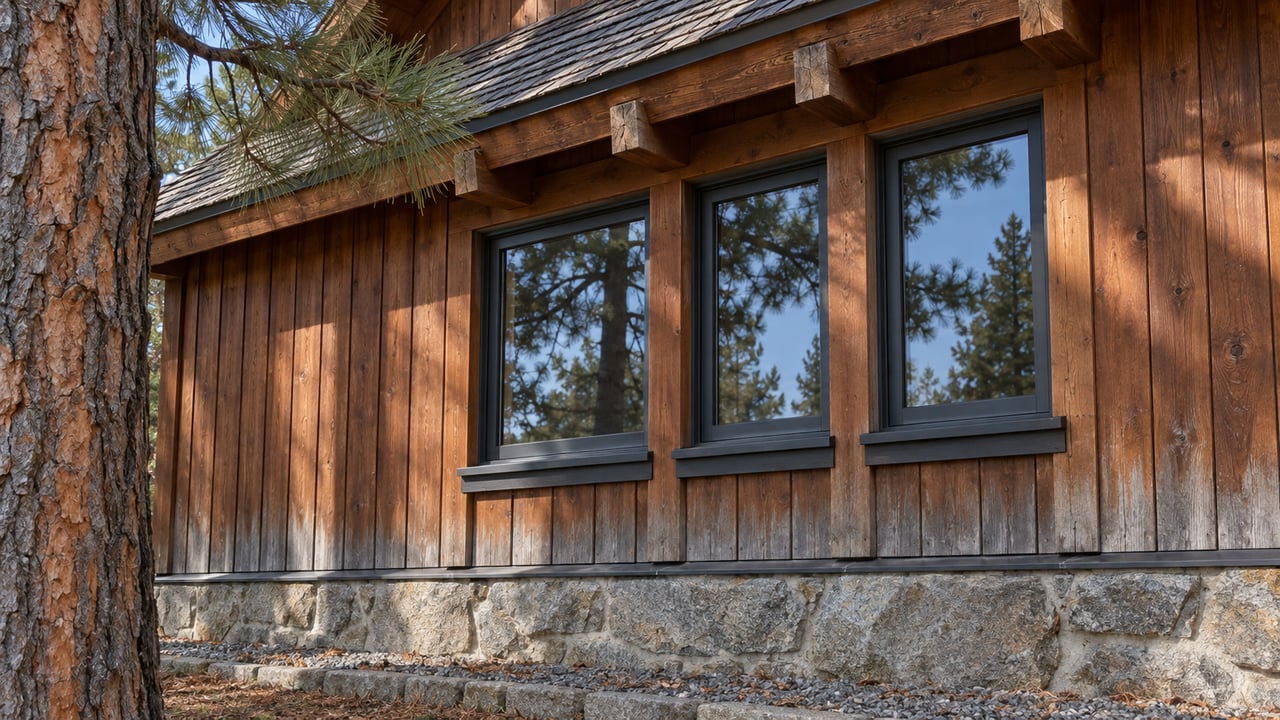
Can you get homeowners insurance in South Lake Tahoe in 2026?
Real Estate
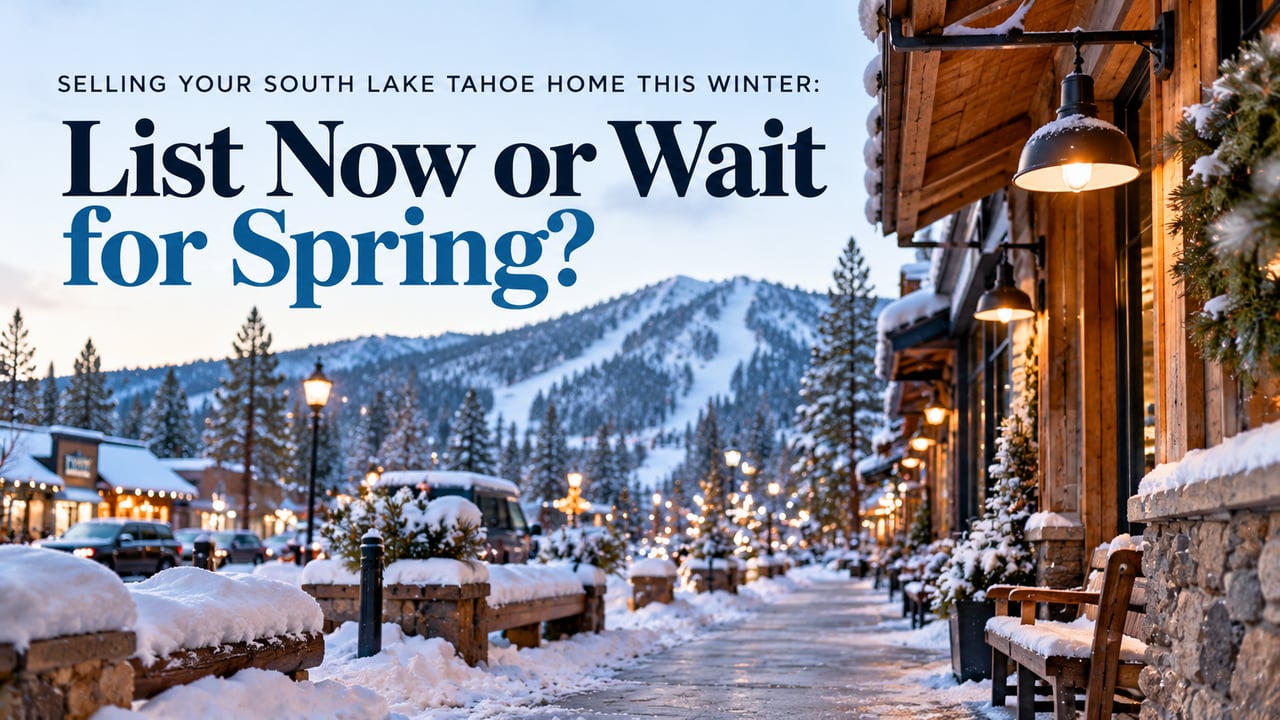
Is winter a good time to sell a house in South Lake Tahoe?
Real Estate
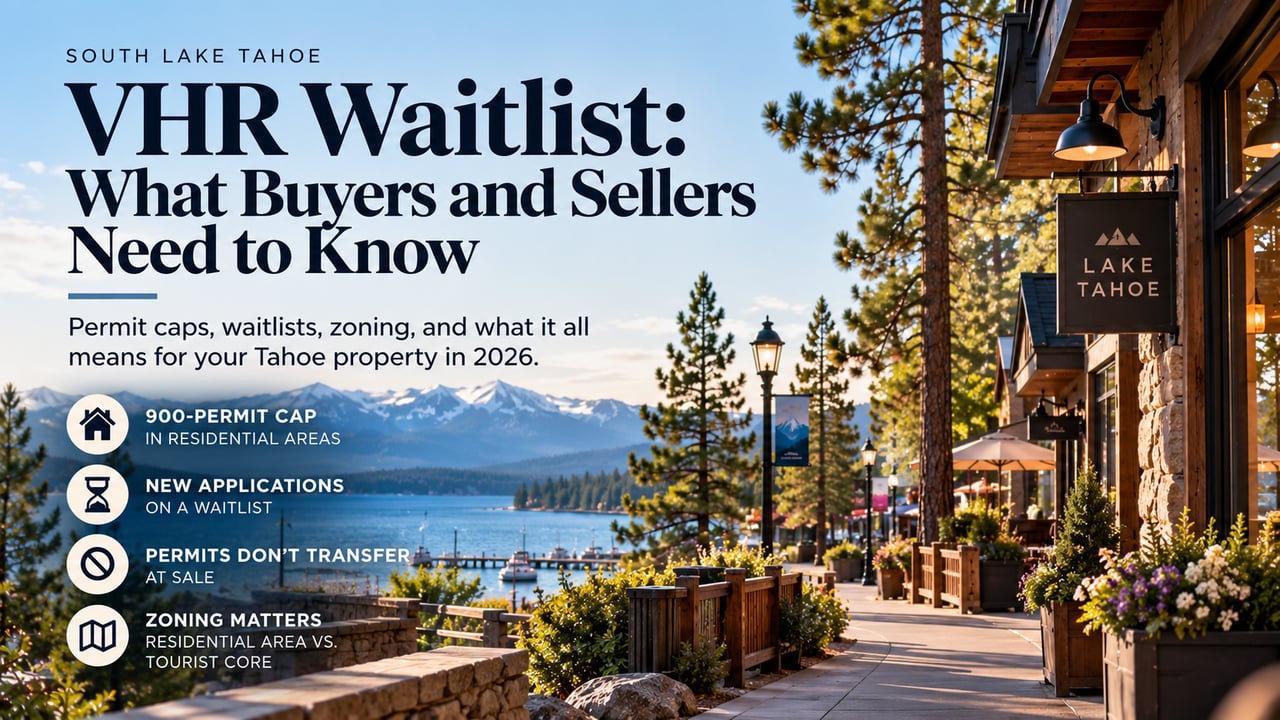
South Lake Tahoe's residential VHR permits are capped at 900 and new applications are waitlisted. Permits don't transfer at sale. Here's what that means for you.
Real Estate
Under Prop 19, an inherited South Lake Tahoe second home is usually reassessed to market value. Here's how it works, when the exclusion applies, and what families shou… Read more
Realize your real estate dreams with trusted local experts. As your local real estate specialists, we are here to tailor solutions to your individual needs. Connecting with us is more than just transactional—we care deeply about the long-term life cycle of your investment and believe in building a symbiotic relationship. Reach out today, we are ready to assist!