Homewood in 2026: Why the Median Price Hides the Real West Shore Story
August 6, 2026
August 6, 2026
A buyer called last month about a Chamberlands cabin listed just under a million. The listing agent had mentioned it was "already permitted for short-term rental." Both parts were true. Neither part was useful. Under Placer County's ordinance, an STR permit terminates automatically when the property changes hands, and the new owner has to reapply, pass a fresh interior Fire Life Safety inspection at $507.02, clear defensible space with North Tahoe Fire, and land inside the county's 3,900-permit cap before advertising a single night. That is the kind of friction that does not appear on a portal listing, and in Homewood this year it matters more than usual. The West Shore is in the middle of a resort transformation that will reshape what buyers get for their money, and the market data most people are reading is already describing a neighborhood that is disappearing.
The headline West Shore statistic for the first quarter of 2026 was a median single-family sale price of $900,000 across 21 transactions, roughly $48.9 million in volume, with homes averaging 106 days on market. Read quickly, that number suggests a stable, mid-market cabin community. Read carefully, it does not describe a single market at all. The average list price over the same quarter was approximately $2.33 million. A gap that wide between median and mean is not noise. It is the fingerprint of a bifurcated inventory: a stack of uphill cabins and interior lots pulling the median down, and a thin ribbon of West Lake Boulevard lakefront and Chambers Landing waterfront pulling the mean up.
| Q1 2026 West Shore | Figure |
|---|---|
| Single-family sales | 21 |
| Total volume | ~$48.9M |
| Median sale price | $900,000 |
| Average list price | ~$2.33M |
| Average days on market | 106 |
| Condo/townhome sales | 1 (at $560,000) |
The 106-day marketing period is the more revealing number. It tells you buyers are underwriting deliberately, not sprinting, and it tells sellers that the "just list it, Tahoe sells itself" playbook has aged out. Deliberation is not the same as weakness. West Shore inventory remains among the most supply-constrained in the basin, and that constraint is about to tighten in a specific, dateable way.
Crews began pulling down the Madden Chair, originally installed in 1966, immediately after Homewood Mountain Resort closed on March 18, 2026 due to deteriorating snow. Its replacement is an eight-passenger gondola, part of the Master Plan the Tahoe Regional Planning Agency approved on January 22, 2025, after the TRPA governing board attached a community access plan that committed the resort to remaining open to the public. General manager Andy Buckley told KOLO in late March that the gondola is targeted to open in December, in time for the 2026-27 ski season, and that the first phase of chalets is expected to go on sale later this summer. Design work on the next village phase is scheduled to begin in 2027, and further plan components include replacement of the Ellis Chair with a high-speed quad, a mid-mountain lodge with a learn-to-ski lift, food service, and a community pool.
For a buyer, three consequences follow.
First, the 2025-26 season was the last winter Homewood will operate with mid-century infrastructure. Every comparable sale on the books right now was underwritten against that version of the mountain.
Second, the chalet release is a new competitive product against existing cabin inventory. When resort-adjacent, presumably HOA-managed units come online with a modern gondola at the door, the delta between "old Homewood cabin near the resort" and "new Homewood chalet at the resort" gets priced. Some of that pricing pressure lifts nearby existing homes. Some of it exposes them.
Third, construction is a real, lived variable through the fall. Buyers touring in August and September will hear equipment. That is a negotiating lever now and a nonissue by New Year's.
Homewood sits in unincorporated eastern Placer County, and Placer's STR ordinance behaves differently from the systems buyers may be used to in Truckee, South Lake Tahoe, or Washoe. The specifics reward a slow read.
Rehearse that sequence against a typical closing timeline. A buyer who closes in October, after the last snow-free defensible-space window, may not clear both inspections until late spring. If the cap fills between now and then, that buyer's ability to run a nightly rental in year one is not a matter of paperwork speed. It is a matter of whether the buyer is holding a live permit before the door closes. Placer County publishes the current permit count and ordinance text directly at placer.ca.gov/6109/Short-Term-Rental-Program.
The West Shore is often described as a single product. In Homewood it fractures into at least three, and understanding which one you are buying matters more than any median.
West Lake Boulevard lakefront. The scarce, mean-lifting inventory. Pier and buoy rights, shoreline quality, and TRPA coverage limits drive value more than square footage does. These transactions almost never move on the same clock as the rest of the neighborhood.
HOA beach neighborhoods on the uphill side. Chamberlands, McKinney Estates, McKinney Shores, and adjacent subdivisions offer optional membership access to shared beach, pool, tennis, and pickleball infrastructure. The Chamberlands Beach and Mountain Club and Chambers Landing Recreation Association memberships are the lifestyle unlock that turns a mid-tier cabin into a functional lake house without a lakefront price. This is where the resort transformation matters most, because these homes sit within a plausible walk or short drive of both the new gondola base and Chambers Landing, the historic floating pier bar.
Interior forest cabins uphill toward McKinney Creek. Older stock, more character, more deferred maintenance to underwrite. These homes anchor the low end of the median and are the ones where a slow inspection period pays for itself.
A CMA that treats these as one comp set will mislead in both directions.
The next six months contain a set of dated events that will be legible in comps a year from now and are being negotiated live today. The Master Plan is approved. The gondola is under construction. The first chalets are pricing. The STR permit ledger is thinning. A buyer who acts inside this window is underwriting the old Homewood at old-Homewood comps, with the option value of the new one. A buyer who waits until the gondola spins in December will be shopping against buyers who have already priced it in.
Old Highway 89 has not changed. Obexer's Marina and Chambers Landing are still on the water. What has changed is that the market's slow, deliberate 106-day rhythm is about to meet a hard calendar event. That is the mechanism the median does not show.
Does buying a home with an existing Placer STR permit help me? Not directly. The seller's permit terminates at close of escrow. What helps is buying while the cap still has headroom, so your fresh application is processed rather than waitlisted.
Will Homewood construction affect showings and appraisals this fall? Expect audible work through the summer and fall on the Madden site and gondola line. Appraisals key off closed comps, not construction noise, but buyers can and should use active work as a negotiating input during the marketing period.
Is a chalet release comparable to existing Homewood cabin stock? Different product, different HOA structure, different maintenance profile. Treat any new construction as its own comp bucket rather than as a data point against a 1970s cabin two streets away.
If you are weighing a purchase on the West Shore before the gondola opens, the questions worth asking are specific, dated, and property-level. Ascension Real Estate works this market at the parcel level, from permit status to Master Plan proximity to what the next chalet phase will actually compete against. Live the Tahoe Life — Start Your Search.

Real Estate
Can you get homeowners insurance in South Lake Tahoe in 2026?

Real Estate
Is winter a good time to sell a house in South Lake Tahoe?

Real Estate
South Lake Tahoe's residential VHR permits are capped at 900 and new applications are waitlisted. Permits don't transfer at sale. Here's what that means for you.
Real Estate
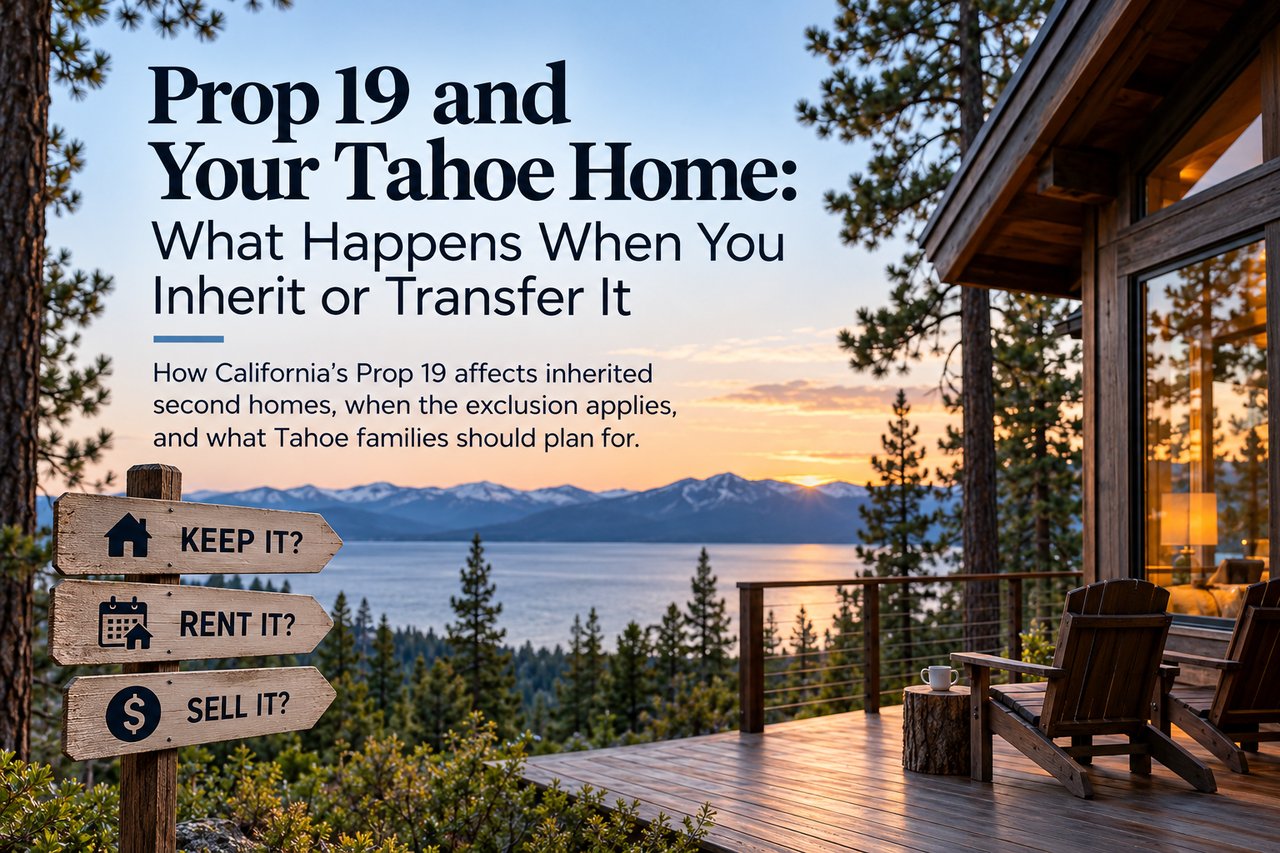
Under Prop 19, an inherited South Lake Tahoe second home is usually reassessed to market value. Here's how it works, when the exclusion applies, and what families shou… Read more
Realize your real estate dreams with trusted local experts. As your local real estate specialists, we are here to tailor solutions to your individual needs. Connecting with us is more than just transactional—we care deeply about the long-term life cycle of your investment and believe in building a symbiotic relationship. Reach out today, we are ready to assist!