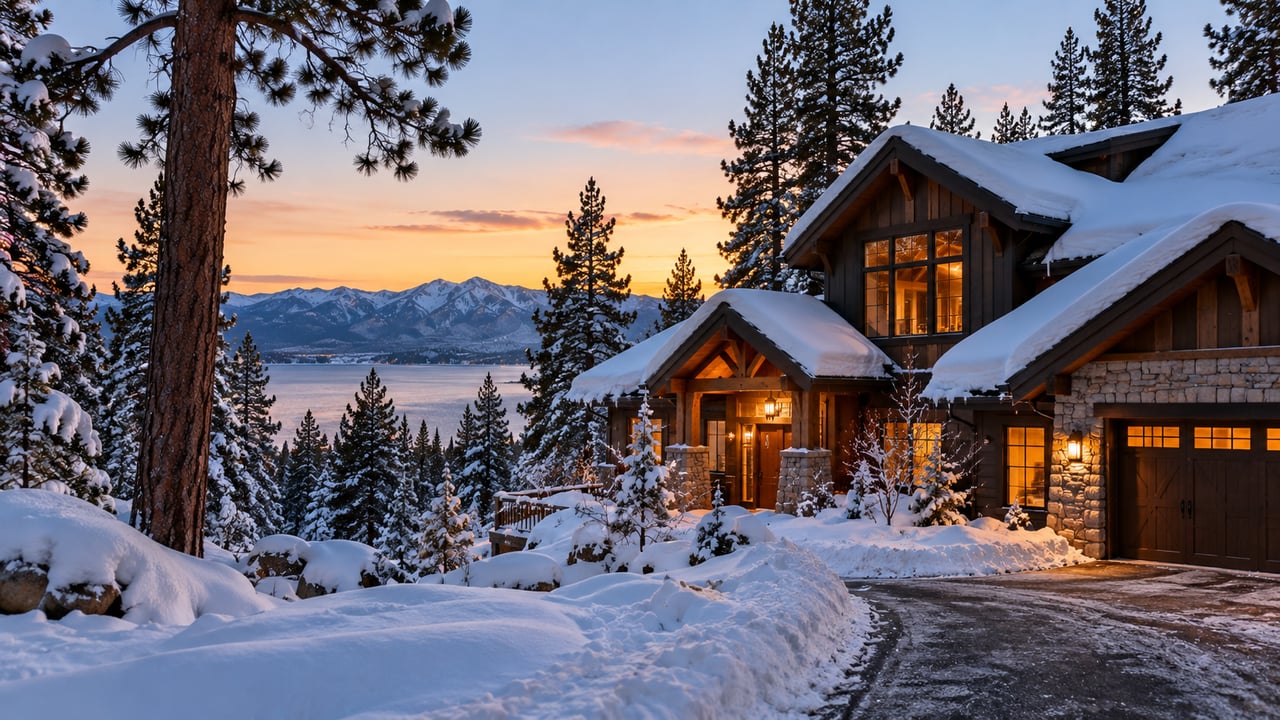
Buying a South Lake Tahoe Home in Winter: What Snow Hides
Salmon Smith Ryan Smith November 2, 2026
Salmon Smith Ryan Smith November 2, 2026
Yes, if you build your contract around what snow can hide. Winter buyers often face less competition and more motivated sellers, but a snow-covered lot makes it harder to see the roof, drainage, driveway, decks, and TRPA-regulated hard surfaces.
By Ryan Smith | October 27, 2026
Rules, fees, timelines, and engineering values change and vary by parcel. Everything below reflects my understanding at the time of writing and should be verified with your inspector, the city or county, TRPA, your insurer, and your title company before you rely on it.
Ski season is the moment a lot of buyers decide they're finally done renting Tahoe weekends. The lifts open, the cabins fill, and the question I hear most is some version of: "Is winter a bad time to buy, since I can't see the house?"
It's not a bad time. It's a time to buy differently. Here's how I walk my buyers through it.
A foot of snow can cover the exact things that cost buyers the most money later. Before you remove contingencies on a winter purchase, put a plan against each of these.
Tahoe roofs carry serious weight, and you can't judge a roof you can't see. Ask the seller for the roof's age, any repair or leak history, and any past ice dam damage. Have your inspector go into the attic and look at rafters, sheathing, and insulation, because the inside tells you what the outside can't. Look for stains, sagging, and signs of past repairs.
Snow-load design values vary by jurisdiction and elevation, and older homes were often built to lower standards than today's. Douglas County publishes roof snow load guidance, and its document notes that structures built before the mid-1990s were designed to lower loads than current ones. I haven't confirmed the current design value for your specific address, so ask the city or county building department and your inspector. If anything looks off, bring in a structural engineer.
Standing snow covers swales, French drains, retaining walls, and the slope of your driveway. Ask for photos from summer or last fall. Ask the seller where the water goes in spring and whether there's ever been water in the crawlspace.
Crawlspaces matter most at the spring thaw. A dry crawlspace in January can be a wet one in April. Ask for any history of moisture, and build in the right to look again.
Decks, stairs, and walkways are safety items, and they're also where unpermitted coverage tends to show up. Ask what's under the snow, and ask for permits on any additions.
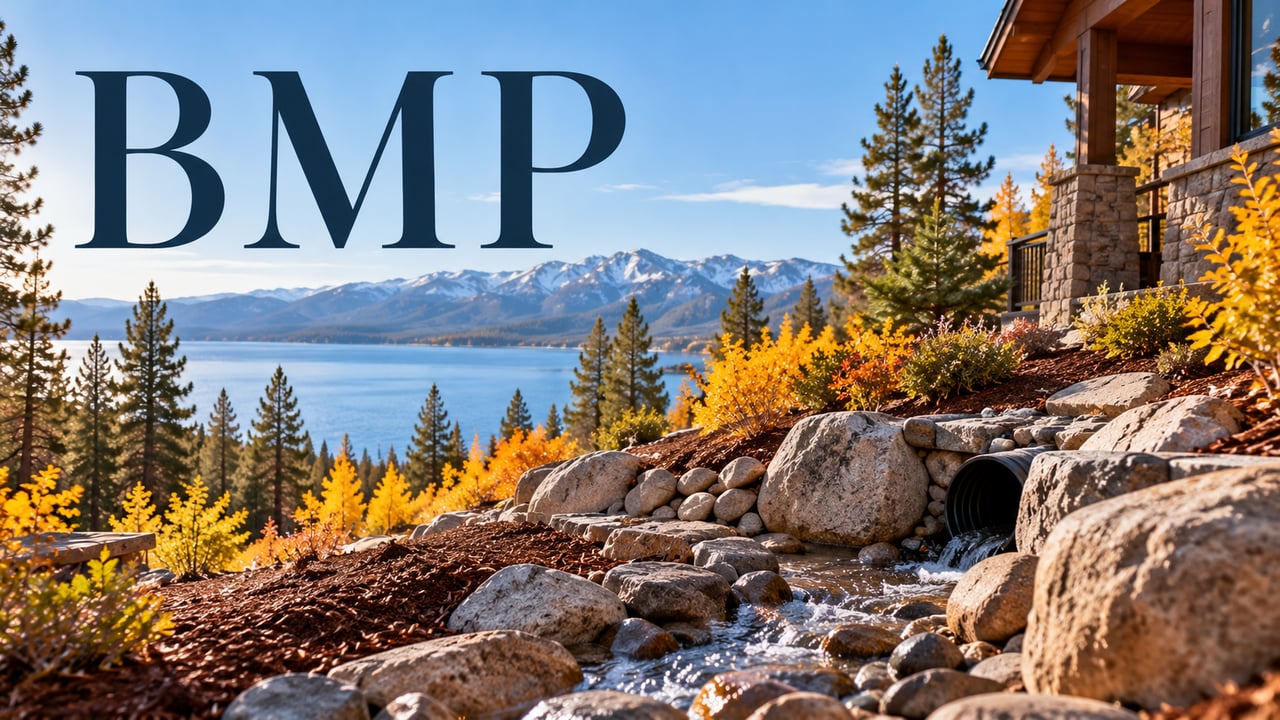
Both are Tahoe-only questions, and snow doesn't change them. A BMP certificate shows that required stormwater and erosion-control improvements are in place. Land coverage controls how much of a lot can be built on or paved, which affects any remodel or rebuild you have in mind.
Here's the winter wrinkle: soil-disturbing work is generally restricted outside TRPA's grading season, which runs May 1 through October 15 under TRPA's published guidance. If a BMP retrofit is needed, you may not be able to do the work until spring. Ask the seller to show the certificate, or negotiate the cost and timing of the work before you close. Check the parcel's status with TRPA, because I won't assume it for you.
California sellers of homes in high and very high fire hazard zones must provide defensible space documentation at sale, a rule often called AB 38 that has applied since July 1, 2021. In winter, ask whether the inspection has been done, when, and what it found. I haven't confirmed how snow cover affects inspection timing in the South Shore, so I'd ask the inspecting agency directly. You can also read more in my post on the South Lake Tahoe VHR waitlist if rental income is part of your plan.
You don't need to lose a deal to protect yourself. You need clear language.
A full inspection period with the right specialists. General inspection, plus roof and attic, chimney and wood stove, sewer lateral, and a structural engineer if needed.
Seller disclosures that ask about snow-season history. Leaks, ice dams, frozen pipes, drainage, and crawlspace moisture. In California that means the Transfer Disclosure Statement and Natural Hazard Disclosure. On the Nevada side it's the Seller's Real Property Disclosure. Your title company or escrow officer can confirm the current forms.
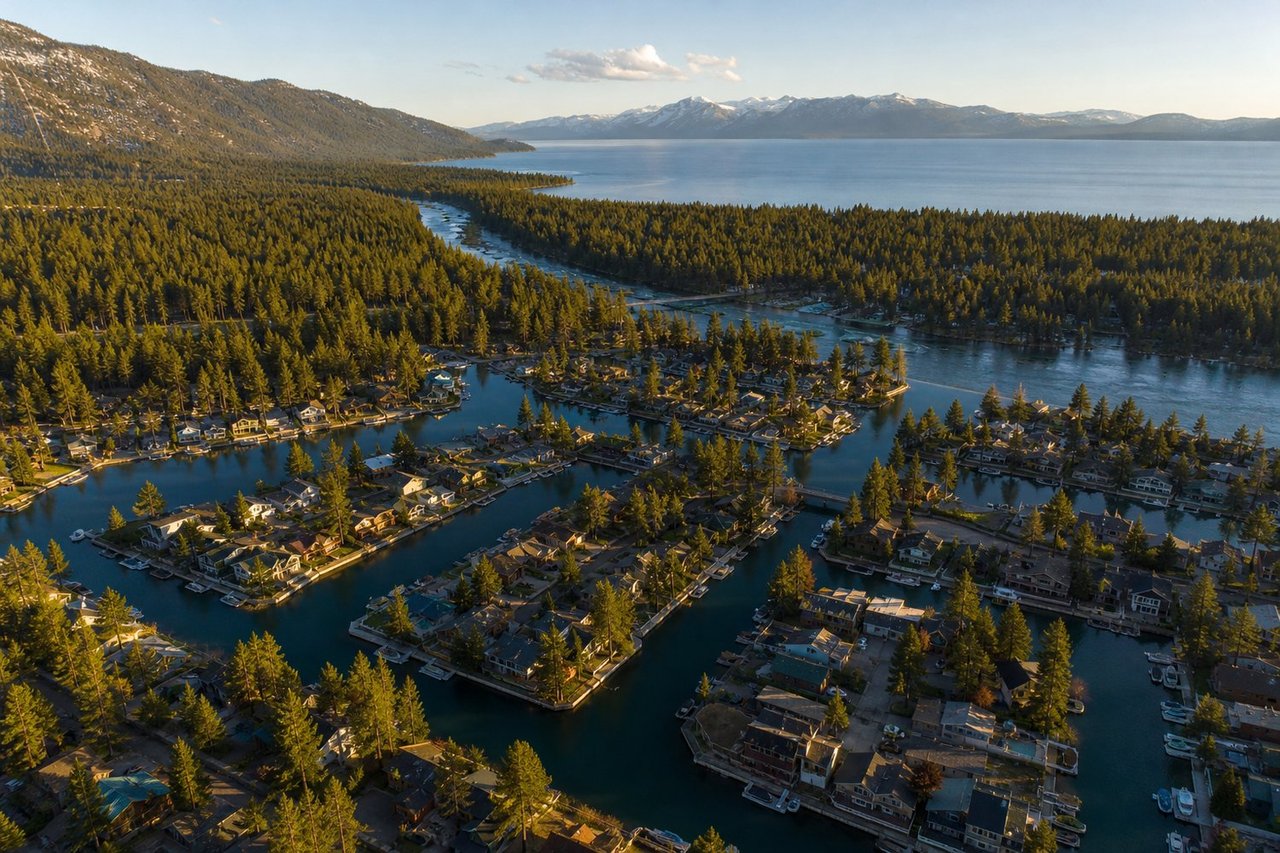
Documents in hand before you remove contingencies. BMP certificate, permit history, HOA documents if you're in an association like the Tahoe Keys, and the defensible space report on the California side.
An insurance quote on the actual address. Get this early. Coverage and premiums vary by address, and I covered what buyers should know in the 2026 homeowners insurance guide.
Winter shows you things July never will. Visit after a storm if you can. Can you get up the driveway? Where does the plow pile the snow? Does the heat keep up? Is the house comfortable at 7 a.m., when the temperature has dropped? Those answers shape whether this is the right house for you.
Winter isn't only a risk. Inventory is often thinner, and some sellers who list in the off-season are motivated. If you've done the homework, a winter purchase can be a chance to negotiate when fewer buyers are out looking. I talked about the seller's side of this in selling your South Lake Tahoe home this winter. Whether it works for you depends on your price range, your timeline, and the specific home, and that's a conversation worth having before you tour.
The process differs a bit depending on which side of the state line the home sits on. In El Dorado County, the county transfer tax and disclosure forms are California ones. In Douglas County, they're Nevada ones. TRPA rules apply on both sides, which is why I work with buyers on both. Your title company will confirm the closing details for your address.
Is winter a bad time to buy a house in South Lake Tahoe?
Not necessarily. Competition is often lighter and some sellers are more motivated, but snow can hide the roof, drainage, and exterior conditions. A thorough inspection and well-written contingencies protect you.
Can a home inspector inspect a snow-covered roof?
Often only partly. Inspectors can examine the attic, interior ceilings, and any visible areas, but a snow-covered surface limits what they can see. Ask your inspector what they can and can't assess, and consider a follow-up look after the snow melts if your contract allows it.
What is a TRPA BMP certificate, and can I get the work done in winter?
A BMP certificate shows that required stormwater and erosion-control improvements are in place. TRPA's published grading season runs May 1 through October 15, so soil-disturbing retrofits generally wait until spring. Verify your parcel's status with TRPA before you buy.
Do I need a defensible space report when I buy in South Lake Tahoe?
On the California side, sellers of homes in high and very high fire hazard zones must provide defensible space documentation at sale. Ask for it early and confirm your zone with the inspecting agency.
Winter buying in South Lake Tahoe rewards preparation. Know what the snow hides, ask for the documents that fill the gaps, and write your contract around the unknowns.
If you're thinking through this for your own situation, call or text me anytime at (530) 545-0045. I'm happy to walk through a specific home with you and run the numbers.
About Ryan Smith
Ryan Smith is a REALTOR® with Compass | Lake Tahoe, based in South Lake Tahoe. He works with buyers, sellers, and investors throughout South Lake Tahoe, as well as the surrounding California and Nevada sides of Lake Tahoe, dual-licensed in both states (CA DRE #02095506, NV #0188892). His focus ranges from single-family homes to new construction and luxury properties.
Real Estate
Real Estate

Salmon Smith
Salmon Smith
Is it smart to buy a home in South Lake Tahoe in winter?
Real Estate
What do you need to do before selling a home in South Lake Tahoe?
Salmon Smith

Real Estate
How much will you net selling a home in South Lake Tahoe?

Real Estate
Can you get homeowners insurance in South Lake Tahoe in 2026?
Salmon Smith
Realize your real estate dreams with trusted local experts. As your local real estate specialists, we are here to tailor solutions to your individual needs. Connecting with us is more than just transactional—we care deeply about the long-term life cycle of your investment and believe in building a symbiotic relationship. Reach out today, we are ready to assist!